30 Oct 2026
Tracing the Interplay Between Regulatory Frameworks and Community Timelines in Shared Project Ecosystems
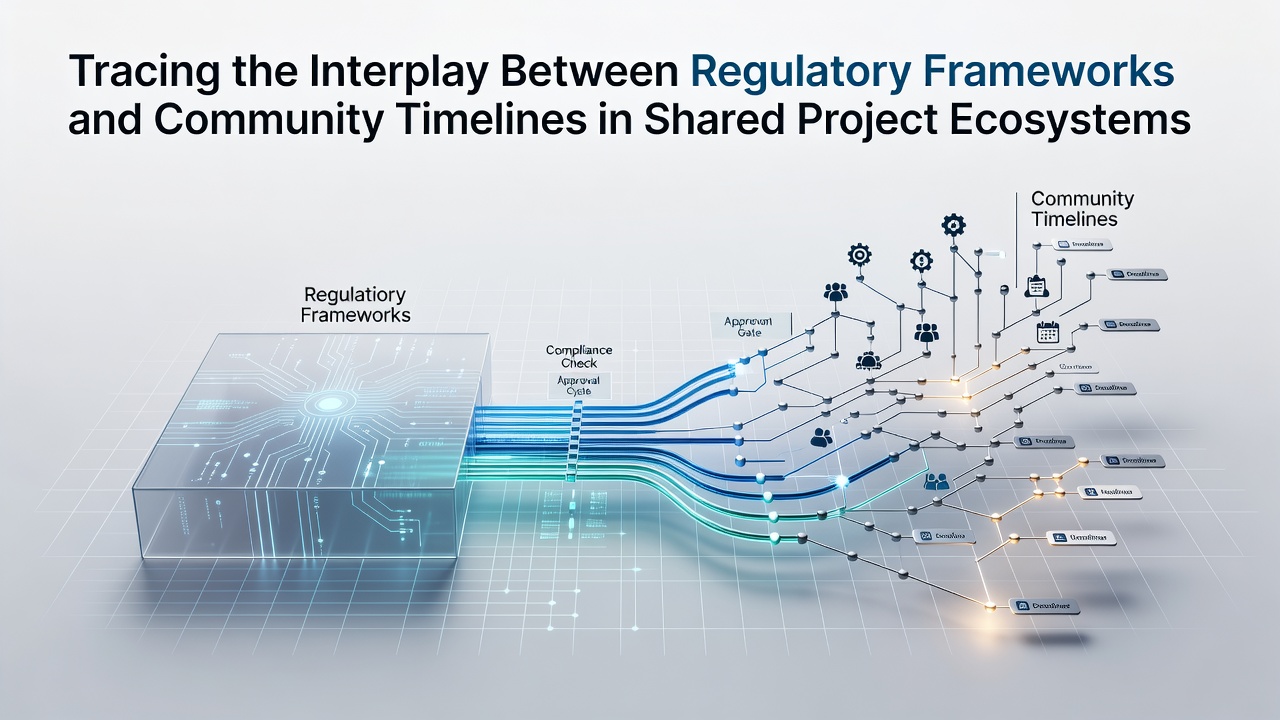
Shared project ecosystems bring together diverse stakeholders who coordinate resources, set milestones, and navigate external rules that shape progress. Regulatory frameworks establish boundaries through laws on safety, data handling, environmental impact, and intellectual property while community timelines reflect collective decisions on when tasks begin, advance, and conclude. Observers note that these two forces often intersect at critical points where compliance requirements alter planned schedules or where community-driven deadlines prompt adjustments in regulatory submissions.
Regulatory Frameworks in Collaborative Settings
Government agencies across regions define standards that apply to joint initiatives, such as those outlined by the European Commission in its directives on product safety and the Australian Competition and Consumer Commission in guidelines for consumer data protection. These rules require documentation, testing, and reporting at specific stages, which forces project groups to allocate time for reviews and revisions. Researchers have documented cases where updates to environmental assessment procedures extended approval periods by several months, shifting downstream activities like material procurement and team training. In October 2026, new reporting thresholds under certain North American standards are scheduled to take effect, requiring additional verification steps that communities must incorporate into their planning cycles.
Community Timelines and Decision-Making Processes
Participants in shared ecosystems establish timelines through consensus mechanisms, voting systems, and milestone tracking tools that account for volunteer availability and resource constraints. Data from academic studies on open collaboration platforms shows that groups often set aggressive targets for feature releases or infrastructure builds, yet external factors introduce variability. Those who've examined project logs find that delays frequently stem from the need to align internal goals with external compliance checkpoints rather than from internal disagreements alone. Community leaders typically maintain flexible buffers in their schedules to accommodate regulatory feedback loops, which can include public consultations or third-party audits.
Points of Interplay and Adjustment Mechanisms
The interaction becomes evident when a regulatory change coincides with an active community phase, prompting reallocation of effort toward documentation or redesign. For instance, updates to building code interpretations in Canadian jurisdictions have required project teams to revisit structural plans mid-cycle, extending timelines by 15 to 25 percent according to industry reports. Conversely, community pressure for rapid deployment has led groups to front-load regulatory consultations, securing preliminary approvals that stabilize later stages. What's interesting is how these adjustments create feedback where one ecosystem's timeline shifts influence another's regulatory workload, as agencies process clustered submissions during peak periods.
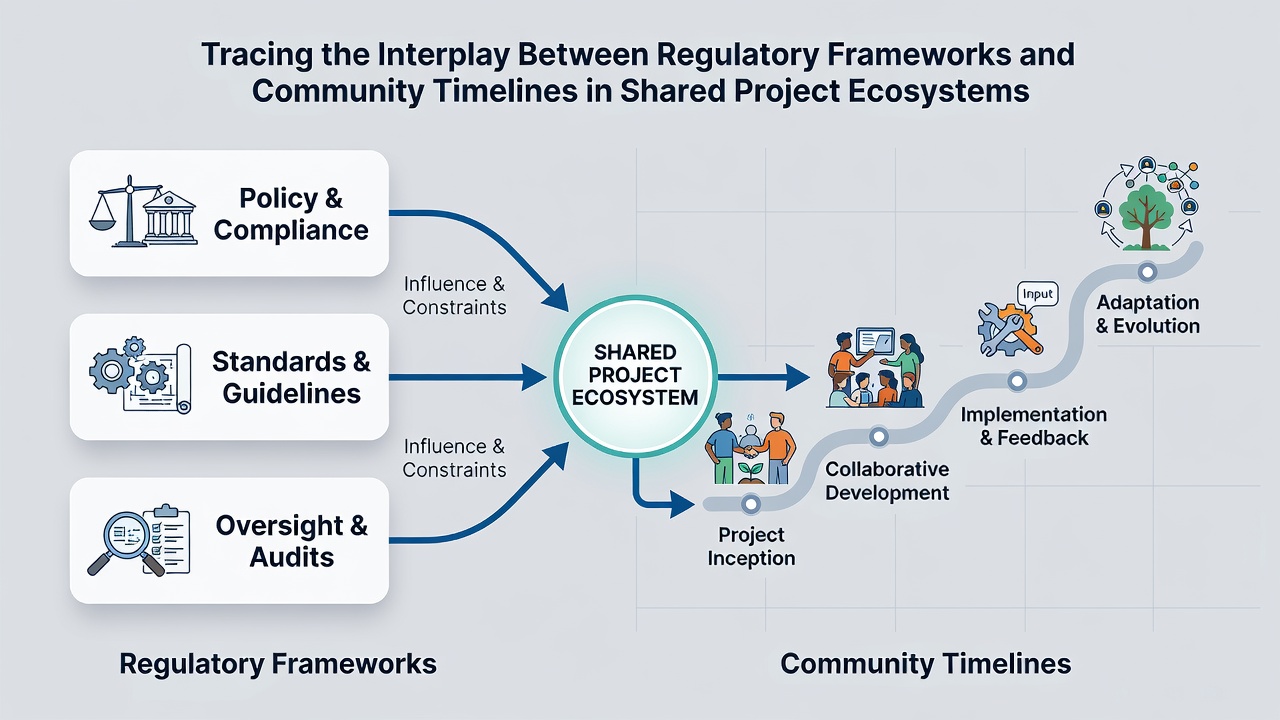
Stakeholders address these dynamics through joint working groups that map regulatory calendars against community roadmaps, identifying overlap zones early. Evidence suggests that projects employing such mapping reduce compliance-related extensions by maintaining parallel tracks for technical work and regulatory engagement. Figures from research institutions tracking multi-stakeholder initiatives reveal that successful coordination correlates with regular cross-checks between legal experts and community coordinators rather than sequential handoffs.
Geographic Variations in Approach
Different jurisdictions apply frameworks with varying degrees of prescriptiveness, which affects how communities sequence their work. European models emphasize harmonized standards across member states, leading groups to build in extended review windows from the outset. In contrast, approaches in Singapore and New Zealand often incorporate performance-based criteria that allow faster iteration provided core outcomes are demonstrated. Observers tracking these patterns note that communities operating across borders develop hybrid timelines that satisfy the strictest applicable rules while preserving momentum in less constrained areas. Such adaptations appear in documentation practices where single data sets serve multiple regulatory bodies through modular formatting.
Conclusion
The relationship between regulatory frameworks and community timelines in shared project ecosystems continues to evolve as new rules emerge and collaboration tools improve. Those monitoring these systems report that proactive alignment strategies help maintain progress despite external constraints, with documented examples spanning technology development, infrastructure builds, and environmental restoration efforts. Ongoing data collection from multiple regions will likely refine understanding of optimal sequencing methods that respect both legal requirements and collective pacing preferences.